How should I start marketing my business?
Most small service business owners market in the wrong order. They turn on Google Ads before their landing page has a clear offer or chase brand new leads while never asking their last ten happy customers for a referral or start spending money on traffic before they know what a lead should cost them.
The order matters more than any single tactic. Run things backwards and even good tactics waste money. Run them in the right sequence and even average tactics start to compound.
Here’s the order that actually works, and why each step should come before the next one.
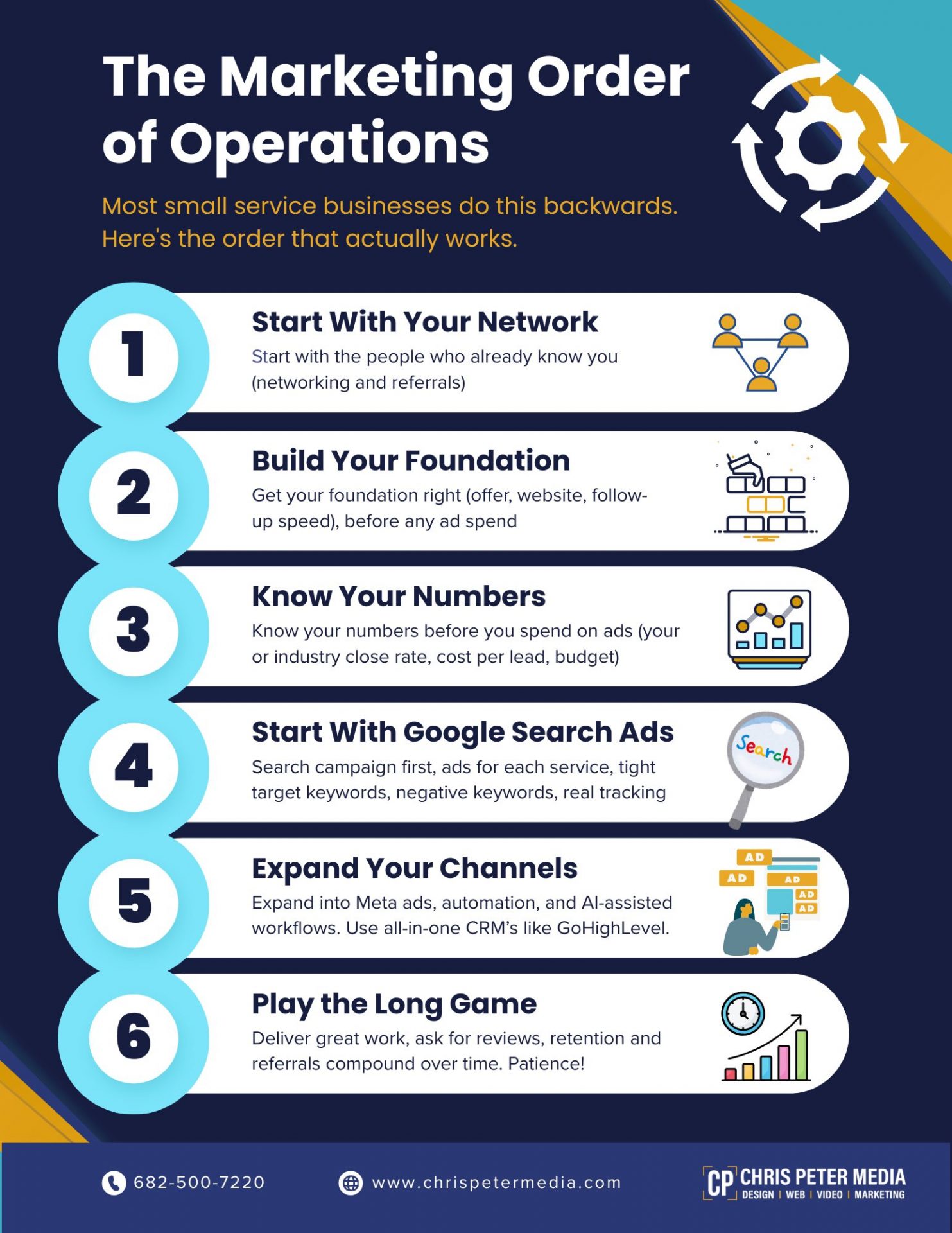
The short version:
- Start with the people who already know you (networking and referrals)
- Get your foundation right (offer, website, follow-up speed), before any ad spend
- Know your numbers before you spend on ads (your or industry close rate, cost per lead, budget)
- Layer in Google Ads the right way
- Expand into Meta ads, automation, and AI-assisted workflows
- Play the long game (retention, referrals, patience)
1. Start With What You Already Have
Before any of this costs a dollar, it costs a few messages.
Reaching out to your own circle, past coworkers, old clients, other business owners, and asking directly for referrals or introductions is still one of the highest-return moves available to a small service business. It’s free, it’s fast, and people are more willing to help than most owners expect.
The research backs up why this works so well. Nielsen has found that consumers trust recommendations from friends and family more than any other form of advertising, by a wide margin. Separately, research out of the Wharton School has found that referred customers cost less to acquire and are worth more over time than customers brought in through other channels, they stick around longer and spend more.
What This Actually Looks Like This Week
- Message five people in your circle and ask if they know anyone who needs your service
- Ask your last few happy clients directly for a referral, don’t wait for them to think of it
- If you don’t have a system for asking, that’s the system to build first, before any ad account
2. Build the Foundation Before You Spend on Traffic
Once the people who already know you are exhausted as a source, the next step isn’t ads. It’s making sure whatever traffic you do get, from referrals, Google, or anywhere else, actually converts once it lands. This is also a great time to start posting on social and build credibility.
A Landing Page That Does Its Job
People decide whether to stay on a page or leave within seconds, not minutes. Research from the Nielsen Norman Group puts that window at roughly 10 to 20 seconds before someone decides if a page is worth their attention. Separately, Stanford’s Web Credibility Project, based on research with thousands of participants, found that people judge a business’s credibility heavily on how the website looks and functions, not just on the work itself.
Translation: an outdated or cluttered site makes people assume the business behind it is outdated too, even when that’s not true.
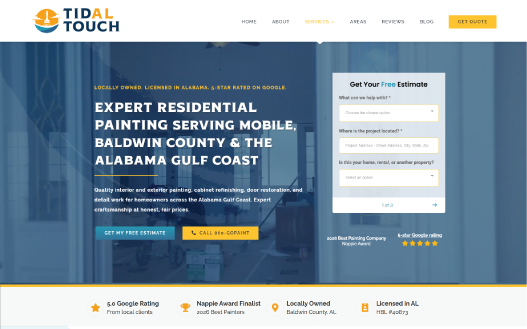
Above the fold, before anyone scrolls, a page needs:
- A headline that says exactly what you do and who it’s for
- Visible contact info, phone number clickable on mobile, plus a short form or button
- At least one trust signal, a review, a stat, a credential, something that says “real business” before they read further
A Form That Doesn’t Feel Like Homework
Long contact forms lose people before they finish typing. Multi-step forms that break the same questions into smaller chunks feel like less effort even when they’re asking for the same information. If the platform can save partial answers when someone doesn’t finish, even better, that’s a partial lead worth a follow-up call.
Check out this article to improve your landing page: 5 Things Every Local Service Business Website Needs to Stop Losing Leads
[LINK: For the full landing page and website checklist, see our companion post, “5 Things Every Local Service Business Website Needs.”] → /local-service-business-website-essentials
Speed to Lead: The Part Almost Everyone Underestimates
This is the single most underrated lever in the entire funnel. Research from MIT’s Lead Response Management study, widely cited by Harvard Business Review, found that responding to a new lead within five minutes makes a business roughly 100 times more likely to actually make contact compared to waiting even thirty minutes. Separately, the business that responds first tends to win the sale close to eight times out of ten, regardless of who has the better pitch.
| If a lead comes in at 2pm and nobody responds until 6pm, that lead has probably already hired someone else. |
The fix doesn’t have to be complicated. A missed-call text-back automation (something a CRM like GoHighLevel handles for a few dollars a month) keeps the conversation open even when nobody can pick up the phone in the moment.
3. Know Your Numbers Before You Spend a Dollar on Ads
Once the foundation can actually receive and convert leads, the next question isn’t “which platform should I advertise on.” It’s “what can I actually afford to pay for a lead.”
Start with close rate. That’s the percentage of qualified leads that become paying customers. Somewhere around 30% is a reasonable benchmark for most service businesses. Closing well under that usually points to lead quality or slow follow-up, not bad advertising.
Then find the ceiling. Multiply your close rate by your average job value. On a $1,500 job at a 30% close rate, that’s $450, the absolute most a lead could cost before the job is essentially paying for its own acquisition and nothing else. A healthy target sits well below that ceiling, generally 20 to 30% of it, which leaves room for materials, labor, and actual profit.
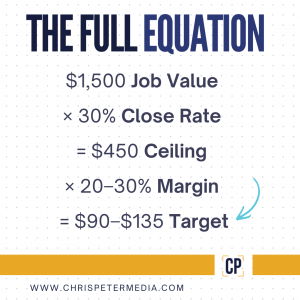
Lead Cost Goal Example
Then zoom out to the whole budget. The U.S. Small Business Administration recommends businesses under $5 million in annual revenue plan to spend somewhere around 7 to 8% of gross revenue on marketing as a whole, not just ads. That’s a useful sanity check before committing a big chunk of the budget to any one channel. (U.S. Small Business Administration)
| Quick Gut Check
If a $2M business should be spending somewhere in the neighborhood of $140,000 to $160,000 a year across all marketing, and Google Ads is eating most of that with nothing left for the website, content, or tools that make the leads convert, the mix is off, not necessarily the total number. |
4. Layer In Google Ads the Right Way
With a foundation that converts and real numbers to work from, paid search becomes worth turning on.
Start with Search, not Performance Max. Performance Max hands control to Google’s automation across every channel at once, and it needs real conversion history, usually 30 or more conversions a month, before it optimizes well. A standard Search campaign gives a new advertiser visibility into actual keywords and search terms while the account builds that history.
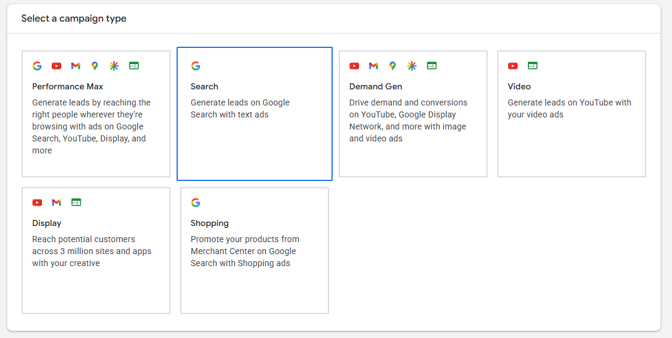
Keep keywords tight to start. Phrase and exact match keep the audience closer to people actually searching for the service, versus broad match, which casts a wider net that can burn budget before there’s enough data for Google’s bidding systems to know what a good lead looks like.
Build a negative keyword list from day one, and check the search terms report weekly. This one free report inside Google Ads shows exactly what people typed before clicking, and it’s the fastest way to sharpen an account without spending more.
Get conversion tracking connected before launch, not after. For WordPress sites, Google’s own Site Kit plugin now supports a direct connection to a Google Ads account for conversion tracking, no manual code required.
One extra option most people never check: Local Services Ads, a separate Google product built specifically for local service categories. Unlike standard Search ads, it charges per lead instead of per click and appears above the regular ad results. Many categories require a license or background check to qualify, which works in a business’s favor since it filters out some of the competition.
One current thing worth knowing: Google has been rolling out mandatory advertiser identity verification across all advertisers. If an account gets flagged, it’ll need business registration documents and a photo ID of the account admin on hand, and missing the deadline pauses ads until it’s resolved. Worth having those documents ready before they’re needed.
5. Expand Into Meta Ads, Automation, and AI
Once the foundation is solid and Google Ads is running on real numbers, there’s room to layer in more channels, not before.
- Meta ads, the simplest entry point is boosting whatever organic post already performed best, rather than building a full campaign from a blank page. Make sure you have your Meta Pixel installed on your site and start learning how to do retargeting ads.
- CRM and automation, tools like GoHighLevel handle missed-call text-back, review requests, and follow-up sequences without adding manual work.
- AI-assisted workflows, running a campaign idea through one AI tool for initial research and a second for refinement (ChatGPT for the first pass, Claude to tighten and expand it) produces a stronger starting point than either tool alone, though it’s still a starting point, not a finished campaign.
None of these fix a shaky foundation. They’re accelerants, not substitutes.
6. Play the Long Game
Google Ads rewards patience more than most people expect. Week one is just data gathering. By three weeks in, there’s usually enough to start cutting what isn’t working. By 90 days, there should be enough real data to judge whether a channel is actually worth continuing.
And through all of it, the easiest growth channel is usually the one already sitting in the client list. Delivering strong enough results that one job turns into a referral, or a repeat client, costs nothing extra to run and tends to outperform paid acquisition over time. That loop is the same one this whole order of operations started with, it just compounds once there’s a system feeding it consistently.
Frequently Asked Questions
Should I do SEO or Google Ads first?
Neither, technically. Networking and referrals come first because they’re free and immediate. SEO and Google Ads both take foundation work (a site that converts, tracking that works) before either one is worth real budget. Once that’s in place, Google Ads tends to produce results faster, while SEO compounds more slowly but keeps paying off without ongoing spend.
How much should I spend on Google Ads to start?
Enough to gather real data without risking the business, often a modest daily budget for the first week or two, then adjusted based on what the search terms report and conversion data actually show.
How long until marketing actually starts working?
For paid ads, expect a real read by around 90 days. For referrals and foundational fixes, results can show up within weeks. SEO is the slowest-moving piece and usually takes months of consistent effort before it compounds.
Do I need a CRM to get started?
Not on day one, but a system for fast follow-up (even a simple missed-call text-back) matters more than almost any other single fix. A CRM just makes that system easier to maintain as volume grows.
Where to Go From Here
If any part of this order feels out of sequence for your business right now, foundation before ads, follow-up speed before spend, that’s usually the highest-leverage place to start. Chris Peter Media builds websites and lead systems specifically around this order for local service businesses (chrispetermedia.com), if reviewing your own setup against this list turns up gaps worth fixing.